
Are Rowan Berries Edible? Safety, Taste, and Traditional Uses
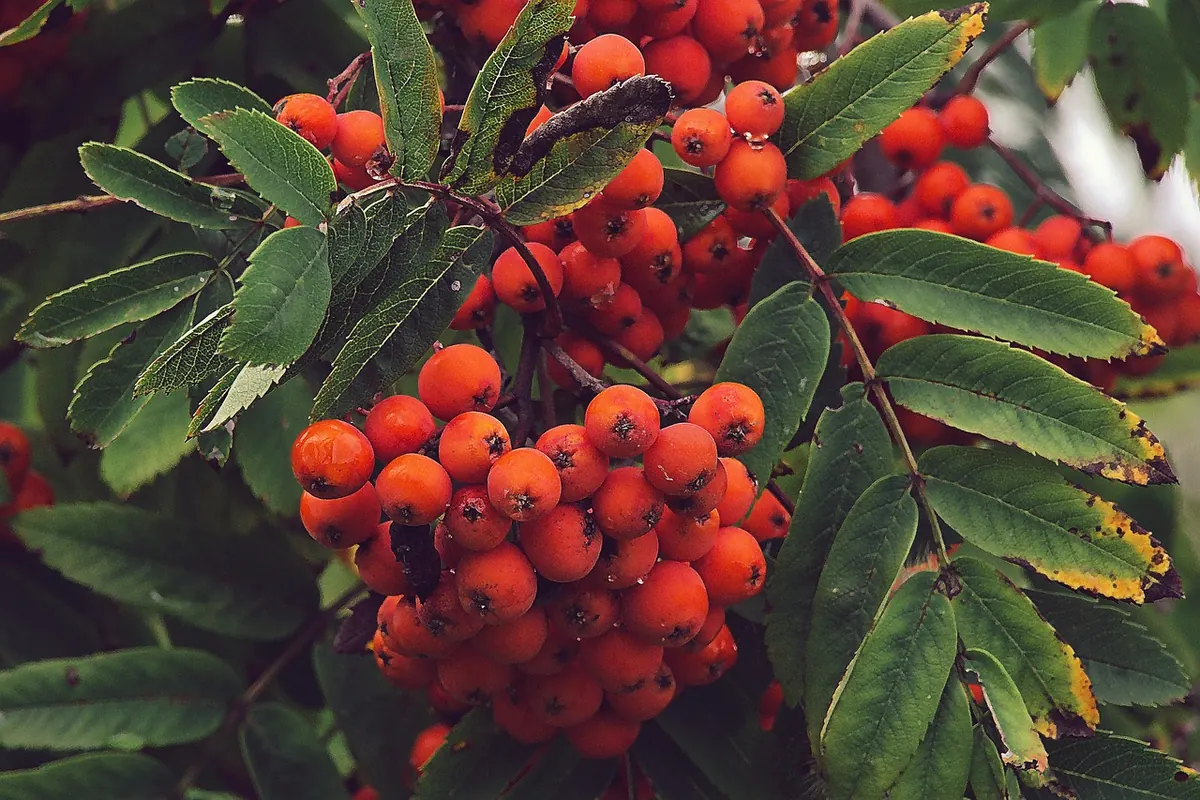
A rowan in October is one of the most generous sights in a hedgerow: heavy trusses of orange-red berries glowing against pale leaves and grey bark. It is also one of the most misunderstood. Most foragers know exactly what to do with elderflowers or blackberries; the rowan stops them in their tracks. Can you eat the berries? Will they make you ill? And why do so many old recipes insist on turning them into jelly?
Are Rowan Berries Edible?
Yes, provided they are cooked first. Rowan berries (Sorbus aucuparia, often called mountain ash) are not a deadly fruit, but raw they contain parasorbic acid, a compound that irritates the stomach and can bring on nausea, cramps and vomiting fairly quickly. Heat changes it. Simmer the berries and the parasorbic acid converts to sorbic acid, the same mild preservative used in commercial food, and the fruit becomes safe to eat.
Safe does not mean pleasant by the handful, though. Even cooked, rowan is bitter and astringent, and eaten in quantity it has a laxative effect thanks to naturally high levels of sorbitol. Treat the berry as an ingredient rather than a snack and you will get along with it very well.
Why Raw Berries Cause Trouble
Four things in a raw rowan berry work against the eater.
- Parasorbic acid. The main culprit. It is responsible for the nausea and stomach pain that follow a raw handful, and it disappears with cooking.
- Sorbitol. A sugar alcohol the gut absorbs slowly. Small amounts are harmless; large amounts cause bloating and loose stools, and this effect survives cooking.
- Seeds. Like apple and plum pips, rowan seeds contain cyanogenic compounds. The quantity in a berry is tiny and the seeds are hard, so swallowing a few is not the same as chewing them. Do not crush, blend or grind them into a purée.
- Tannins. The drying, mouth-puckering finish is tannin, and in quantity it adds to the digestive upheaval.
People vary. One person eats two raw berries and notices nothing; the next eats a handful and spends an uncomfortable evening near the bathroom. If someone eats a large quantity of raw berries and develops persistent vomiting, seek medical advice rather than waiting it out. When it comes to any health concern, a doctor or poison control service is the right call.
What Rowan Berries Taste Like
Raw, a rowan berry is mealy, sour and faintly bitter, with a sharpness somewhere between an unripe apple and a crab apple, followed by that dry, tannic finish that sends you looking for water. Frost is often said to sweeten them. It softens the astringency slightly, but it will not turn them into a dessert berry.
Cooked, everything shifts. The bitterness stays as a low background note, but the fruit's real character arrives: cooked orange peel, apricot, a hint of quince, cooked apple. Rowan jelly is the classic expression of it, a firm amber-red set with a marmalade-like tang that cuts through rich meat. If you have ever eaten a spoonful of bitter orange marmalade and thought it needed more fruit and less sugar, you already understand where rowan sits.
Preparing Rowan Berries for the Pot
- Pick from late August onwards, ideally after the first frost. Choose firm, deep orange-red berries and leave anything green, mushy or shrivelled.
- Strip the berries from their stalks with a fork. Discard stalks, leaves and any damaged fruit.
- Rinse well, then put them in a pan with just enough water to cover.
- Simmer for 15 to 25 minutes, until the skins split and the fruit collapses.
- Mash lightly, then strain through a jelly bag or a double layer of muslin overnight. Do not squeeze the bag hard, and never blend the pulp: pressing forces sediment and bitterness through, and blending releases the seeds.
- Use the juice. Sweeten and set it as jelly, or turn it into syrup, cordial, vinegar or liqueur.
Most cooks work with the juice only. The cooked pulp is edible in the sense that it will not harm you, but it is gritty and bitter, and it earns its place in very few recipes.
Traditional Uses in the Kitchen and the Still Room
In Britain and Ireland, rowan jelly has been served with venison, hare, duck, lamb and cold meats for centuries, and it still turns up on cheese boards next to a sharp cheddar. In Scandinavia the berries go into aquavit, liqueurs and preserves that accompany game and cheese. In parts of northern and eastern Europe, rowan berries were dried and ground to stretch grain flour in poor harvest years, and the fruit also went into vinegar, ketchup-style sauces and firm fruit cheeses.
Medicinally, rowan had a reputation as an astringent: a gargle for sore throats, a remedy for loose bowels, and a source of vitamin C in places where scurvy was a real danger. That history is interesting, but it is not a treatment plan. Rowan can interact with medicines and is not considered suitable in pregnancy, so talk to a doctor or a qualified herbalist before using it for anything beyond food.
The tree carried a second, stranger reputation. Rowan was planted by doorways, tied with red thread and carried by travellers as protection against ill fortune and witchcraft, and cutting one down was thought unlucky in many places. The old Scottish rhyme still gets quoted:
Rowan tree and red thread
Haud the witches a' in dread.
Foraging Rowan Safely
Rowan is easy to recognise once you know what to look for: pinnate leaves with five to eight pairs of sharply serrated leaflets plus a single terminal leaflet, grey-green underneath; smooth silvery-grey bark; flat clusters of creamy flowers in May; and dense, flat-topped heads of small orange-red berries in autumn. Each berry has a small star-shaped scar at its base where it met the stalk, and that scar is the giveaway.
A few lookalikes matter. Guelder rose has translucent red berries and three-lobed leaves, and is not safe raw. Honeysuckle berries are red and paired, and are toxic. Yew has needle-like leaves and a single red fleshy cup around a green seed, and is genuinely deadly. Rowan also hybridises with whitebeam and service tree, so fruit from an odd-looking tree is best left alone.
- Pick away from busy roads, sprayed verges and railway lines.
- Get the landowner's permission on private ground.
- Take a share, not the lot. Birds depend on the crop through winter.
- Avoid overripe, fermenting berries; they make cloudy, poor-tasting juice.
- If you are not completely sure of the identification, walk away. No jelly is worth the risk.
Your First Batch: Rowan and Apple Jelly
Start small. Put
Photo: anaterate / Pixabay