
Rowan Tree Care Calendar: What to Do in Spring, Summer, Autumn, and Winter
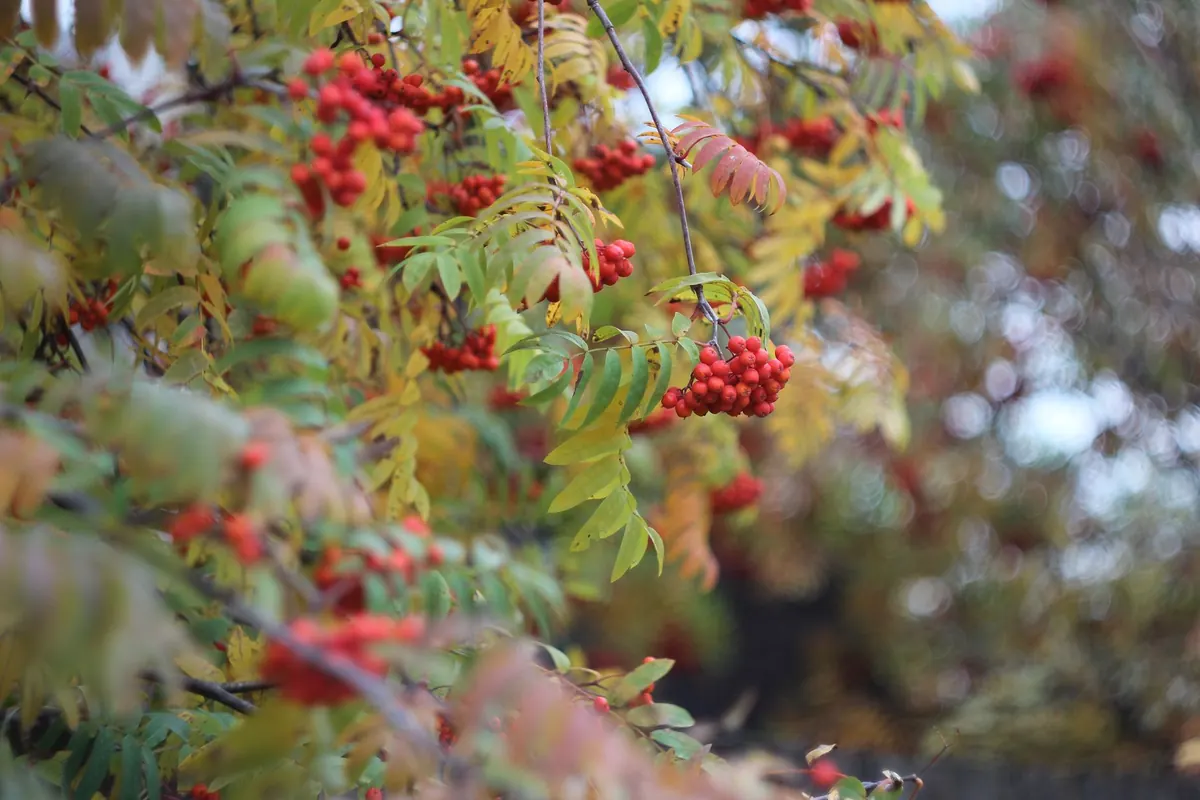
A rowan earns its place quietly. In May it covers itself in flat heads of creamy blossom; by early autumn those flowers have become clusters of scarlet berries, and the fern-like leaves have turned amber and rust before they drop. The fruit hangs on into winter, feeding blackbirds, redwings, fieldfares and the occasional flock of waxwings.
Rowan — Sorbus aucuparia, the mountain ash — is a tough, undemanding tree. It shrugs off wind, cold and poor soil. But undemanding is not the same as maintenance-free, and the jobs that matter are seasonal. Miss the spring mulch and you will spend July with a hose. Prune at the wrong moment and you open a door for disease. Here is a working calendar, season by season.
Spring: Mulch, Weed and Get Ahead of Pests
Spring is when the rowan commits to the year ahead. Buds break, new roots push through the soil, and by late April the tree is in full leaf. Most of what you do now is about setting up the ground beneath it.
- Mulch. Spread 5–8 cm of well-rotted compost, leaf mould or bark over the root zone, out as far as the branches reach. Keep it a hand's width clear of the trunk. Do it while the soil is still damp from winter rain.
- Feeding. A mature rowan in open ground rarely needs anything beyond mulch. If shoots are growing less than about 15 cm a year, top up with a balanced fertiliser. Avoid nitrogen-heavy feeds — they push soft leafy growth at the expense of berries.
- Last call for planting. Bare-root trees go in until the buds break. After that, wait for autumn.
- Pest watch. Aphids gather on soft new tips, curling leaves and leaving sticky honeydew. Rowan leaf roller caterpillars web leaves together at the shoot tips.
On a young tree, look it over once a week. Wash aphids off with a jet of water, pick off webbed leaves, and let ladybirds and hoverflies do the rest. Never spray a broad-spectrum insecticide while the blossom is open — bees are working those flowers, and you need them if you want berries.
Summer: Water Deeply, Weed Widely, Watch Closely
Water is the main event. For the first two or three summers after planting, give a young rowan a proper soak — roughly 20 litres — once a week during dry spells. One deep watering reaches the roots; a daily sprinkle mostly evaporates. Aim at the root zone, not the trunk. Container-grown rowans on a patio may need water every few days in a hot July.
Keep grass and weeds at least 60 cm away from the trunk of a young tree. Competition for water and nutrients is the single most common reason a newly planted rowan sulks for two years instead of growing.
Mid-summer is also when caterpillars and sawfly larvae can strip a tree surprisingly fast. An established rowan will usually refoliate and come back fine, so handpick where you can and shake branches over an old sheet to collect the rest. Pull off any suckers rising from the rootstock while they are still soft rather than cutting them.
If you notice silvering leaves that die back, or sunken dead patches on stems, get a qualified arborist to look before you cut. Diseases such as silver leaf spread through fresh wounds, and the treatment depends on getting the diagnosis right.
Autumn: Berries, Planting and the Best Soil Work of the Year
Berry time runs from late August into October, depending on variety and how far north you are. 'Edulis' and 'Sheerwater Seedling' crop heavily; 'Joseph Rock' gives yellow berries and some of the best autumn colour of any rowan.
Harvesting rowan berries
- Wait until the clusters are fully coloured and firm, then snip whole trusses off with scissors or secateurs.
- Leave the topmost clusters on the tree. That is the birds' share, and they will repay you by clearing insect pests all winter.
- Strip the berries from the stems. They are bitter and harsh raw, and eating them uncooked in quantity can upset your stomach — cooking is what makes them palatable and safe.
- Use them for jelly, chutney or a sharp sauce, traditionally served with game and lamb. If foraging is new to you, use a reliable guide, avoid busy roadside trees, and ask your doctor or pharmacist before using unfamiliar fruit if you are pregnant or on medication.
Autumn is also the best planting season. Bare-root rowans settle in from late October through to March, whenever the ground is neither frozen nor waterlogged. Plant at the same depth the tree grew at before, firm it in, water well, mulch, and fit a stake and a rabbit guard if your site is exposed or your neighbours include deer.
Winter: Prune, Check, Protect
Rowan needs very little pruning. The aim is simply to remove dead, damaged and rubbing branches, thin anything congested, and take out shoots growing inward through the centre of the crown. Resist shortening the main leaders to shape the tree — you will get a thicket of water shoots in reply.
Late winter, from February into early March, is the classic window, just before growth restarts. In areas where silver leaf is common, delay instead until late spring or summer, when spores are less active and cuts heal quickly.
- Check tree ties and stakes. They should hold the tree firm without biting into the bark, and can usually come out after two or three years.
- Inspect rabbit and deer guards — hungry weather is when bark gets stripped.
- Knock heavy snow off branches. Rowan wood bends well, but a loaded branch can split.
- Keep salted snow cleared from paths away from the root zone.
A Year of Rowan Care at a Glance
- Spring: mulch 5–8 cm, finish bare-root planting, check for aphids and leaf rollers.
- Early summer: deep weekly watering for young trees, clear a 60 cm weed-free circle, remove suckers.
- Late summer: pick berries when fully coloured, leaving the top clusters for wildlife.
- Autumn: plant bare-root from late October, refresh mulch, keep fallen leaves off the crown of young trees.
- Winter: prune dead and crossing wood, check ties, stakes and guards.
Keeping the Rhythm
Most of the year, the best thing you can do for a rowan is leave it alone. The care that counts is small and repeatable: a barrow of mulch in spring, a deep soak in a dry July, twenty minutes with sharp secateurs, and a basket of berries in September. Do those things and the tree handles the rest — blossom in May, colour in October, and a larder of fruit that keeps the birds fed until spring.
If something looks seriously wrong — sudden dieback, weeping wounds, bark peeling from the base — call a qualified arborist rather than guessing. Rowan trees live for decades when they are planted well and left to get on with it.
Photo: Сослан / Pexels