
Rowan Folklore in the British Isles: Protection, Witches, and the Tree of Life
Rowan Folklore in the British Isles: Protection, Witches, and the Tree of Life
Few trees in the British Isles carry a heavier reputation than the rowan. Mountain ash, quickbeam, witchen, caorann in Gaelic, criafolen in Welsh — the names alone suggest something more than timber. Long before gardeners admired its white May blossom and orange autumn berries, the rowan was the tree people trusted to keep the wrong sort of visitor away from the door.
Why the Rowan Became a Protective Tree
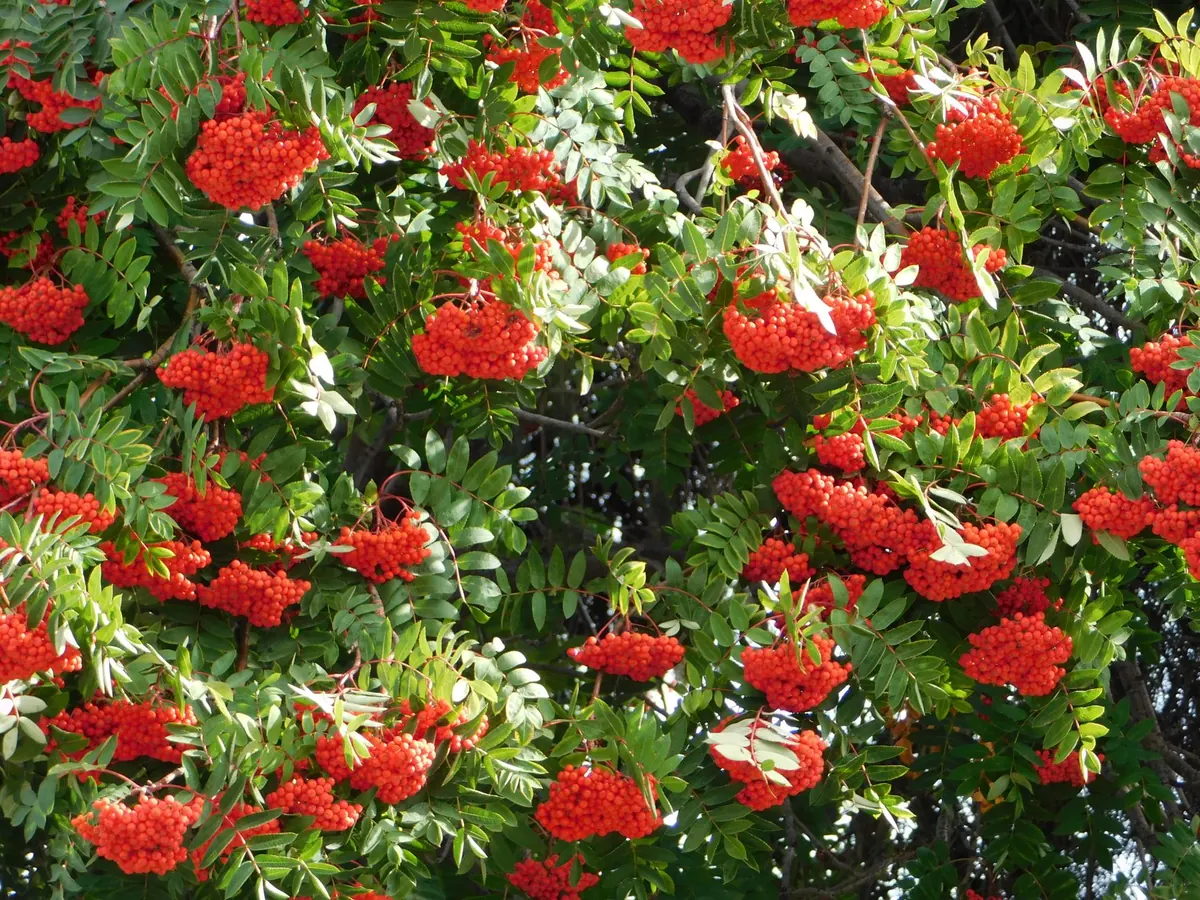
Start with the berry. Turn a ripe rowan berry over and you will find a small five-pointed star pressed into its base. In a world where people read meaning into every shape, that mark was never going to go unnoticed. Add the tree's habit of growing where little else will — high on hillsides, on thin acid soil, above the last of the oakwoods — and the rowan looked like a survivor with something sacred about it.
It also flowers and fruits young, which matters in folklore. A tree that produces blossom and berries within a few years of planting becomes a familiar presence within one lifetime, not a distant monument.
Rowan and Red Thread: the Basic Charm
The best-known protection is almost comically simple. Take two twigs of rowan, cross them, and bind them with red thread. In Scotland the old rhyme had it that rowan tree and red thread would make the witches lose their speed. The cross was not meant to be admired. It was hidden — above the byre door, under the lintel, in the thatch, inside a cradle, in the pocket of a coat.
Charms like this were usually renewed at the turning points of the year, especially Beltane on the first of May and midsummer, when the boundary between the ordinary world and the other one was thought to be at its thinnest. In parts of Perthshire a hoop of rowan and other protective plants was made at Beltane, and cattle were driven through it on their way to the summer grazing.
Other uses turn up again and again across Scotland, Ireland, the Isle of Man and Wales:
- A rowan cross tied with red thread above the door of house or byre
- Sprigs tucked into the rafters, or laid across a churn and milk pail
- A twig tied to a cow's tail or harness, particularly on May Day
- Rowan wood used for churn spurtles, walking sticks and cradle parts — everyday objects that quietly doubled as charms
- Berries strung and hung up, or carried in a pocket, often with a pinch of salt
Rowan and Witches
If rowan was a shield, witches were the reason for it. In Scottish and Irish lore, the rowan's power was specifically directed against maleficium — harmful magic, the evil eye, and the theft of milk or butter by supernatural means. A witch, it was said, could not pass a rowan threshold, and a cow with a rowan twig tied to its tail was safe from being overlooked.
The tree was also said to be avoided by witches for another reason: its berries were sometimes called "the food of the gods" or linked to the Tuatha Dé Danann, and its wood was considered too sacred for everyday mischief. In some accounts, the rowan was a witch's own tree, used in spells, but this is rarer. More often, it was the plant that cancelled a witch's work.
"Rowan tree and red thread / Haud the witches a' in dread." — a Scots rhyme recorded in several variants.
Not every witch story is solemn. In some folktales, a suspected witch is said to have been unable to enter a house until a rowan cross was removed from above the door — or, in a comic twist, to have been caught because she tripped over a rowan stick left on the threshold.
Rowan as the Tree of Life
The rowan's protective reputation rests on something older than fear of witches. In Gaelic and Celtic cosmology, the rowan was associated with the Tree of Life, the axis mundi that connected the upper world, the middle world, and the lower world. Its berries, red as blood, were a symbol of life and renewal in a landscape where winter could be long and hunger real.
In Irish tradition, the rowan was one of the seven "peasant trees" and was often planted near a dwelling for luck. In Wales, the criafolen was similarly respected; its berries were used in dyes and its wood in small domestic objects. To cut down a rowan without good reason was thought to invite misfortune, and in some places a rowan tree was never felled lest the luck of the household go with it.
The Tree of Life connection also explains why rowan appears in stories of travel and protection. Emigrants carried rowan wood in their pockets; fishermen took a sprig aboard; and a rowan staff was said to keep a traveler safe on lonely roads after dark.
Rowan in Ireland, Wales, and the Isle of Man
Though the rowan is often thought of as Scottish, its folklore stretches across the British Isles. In Ireland, the rowan was called caorann and was linked to the fairy folk. A rowan tree growing near a fairy fort was left strictly alone. In County Antrim, a rowan cross was placed in the byre on May Eve; in County Down, rowan berries were sewn into children's clothes.
In Wales, criafolen appears in the Mabinogion and in later folk medicine. Rowan berries were made into a syrup for coughs, and the wood was used for walking sticks and divining rods. In the Isle of Man, rowan was called cuirn and was tied to the tails of cattle on May Day, a custom recorded well into the nineteenth century.
These regional variations show that rowan was not a single superstition but a shared language of protection, adapted to local needs and local dangers.
Rowan in the Modern Garden and Beyond
Today, the rowan is more likely to be planted for its beauty than its magic — for the white blossom that feeds early bees, the autumn berries that feed thrushes and waxwings, and the elegant shape it brings to a small garden. Yet the old lore has not entirely vanished. Rowan crosses still appear above doors in some rural cottages, and rowan twigs are sold at folk festivals and craft fairs.
If you want to invite a little of that old protection into your own life, you do not need to believe in witches. A rowan tree by the gate is a reminder that people once trusted the living world for safety, and that a simple cross of twigs and red thread could carry as much hope as any lock or alarm.
Photo: Zuzanna Musial / Pexels