
Growing Rowan Trees in Pots: A Beginner's Guide for Patios and Balconies
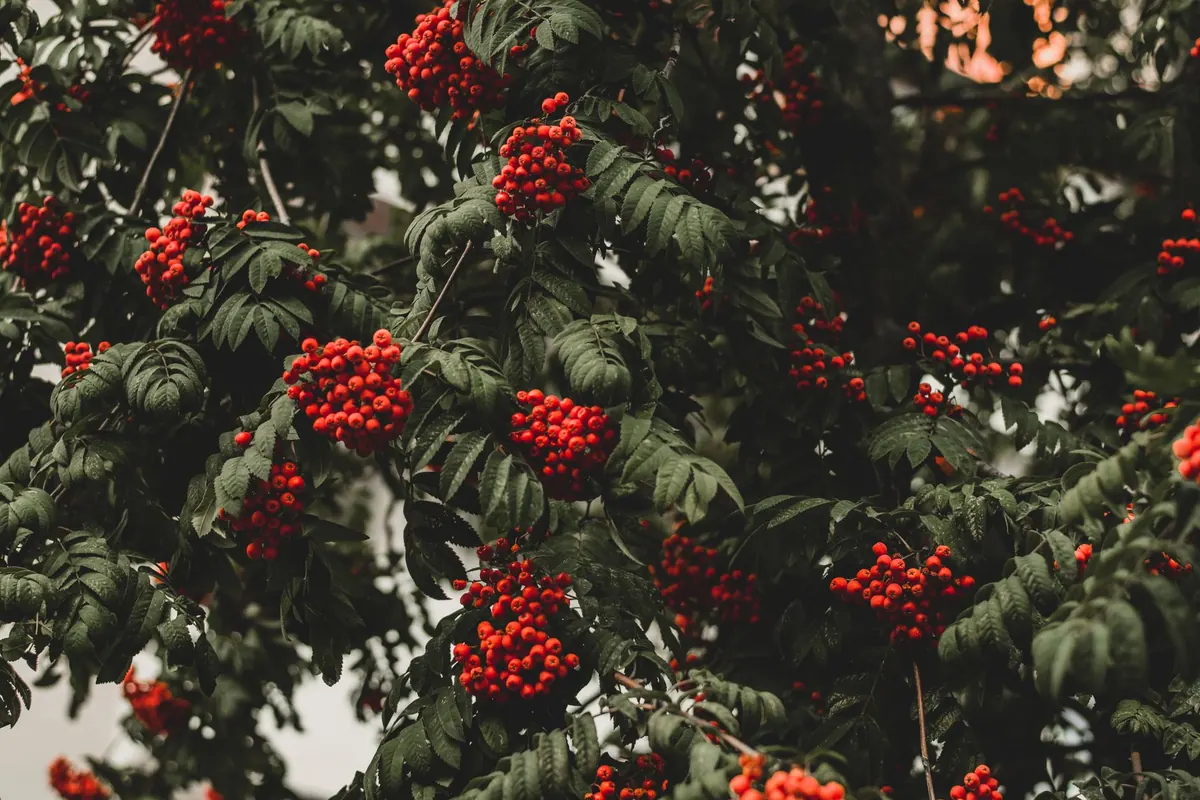
A rowan in a pot sounds like a compromise until you see one in October, loaded with scarlet berries above a two-metre patio wall. With the right variety and a sensible container, a potted rowan gives you the same white spring blossom, the same autumn colour and the same flocks of hungry blackbirds as a tree in open ground. It just needs more from you at the watering can.
Why rowans cope well in containers
Rowans are naturally tough. They grow on thin, rocky ground across northern Europe, tolerate wind and exposure, and root fairly shallow and fibrous rather than sending down a single taproot. That makes them far more forgiving in a pot than an oak or a beech. They also flower and fruit young, often within three or four years, so you are not waiting a decade for the point of the exercise.
The catch is size. Sorbus aucuparia, our native rowan, will happily reach eight metres or more in open ground. Kept in a pot it either sulks or spends its energy trying to escape. Start with something compact.
Choosing a compact rowan
Read the label and look for eventual height and spread, not the height of the plant in front of you. Good candidates for containers include:
- Sorbus reducta – a dwarf, suckering rowan that rarely passes knee height, with pink-flushed white berries. Ideal for a low, wide pot.
- Sorbus poteriifolia – tiny and alpine in habit, best in a trough or a generous herbaceous pot rather than a patio planter.
- Sorbus hupehensis – slender and slow, with blue-green leaves and white berries tinged pink.
- Sorbus vilmorinii – fine, ferny foliage and berries that fade from pink to white as winter comes.
- Sorbus cashmiriana – white berries and reliable autumn colour; small enough to suit a large pot for years.
- Sorbus aucuparia 'Autumn Spire' – a narrow, upright column, useful where you want height without width. It will eventually want a very large container.
Buy bare-root in winter if you can: it is cheaper, the choice is wider, and the tree establishes quickly. Pot-grown trees can be planted at any time of year, but check the rootball before you buy. If roots are circling tightly inside the pot, either tease them out or walk away.
Botanists have shuffled many rowans into new genera in recent years, so you will still see almost everything sold simply as Sorbus. For growing purposes, ignore the argument and buy on habit and size.
The pot, the compost and the drainage
For a dwarf rowan, 30–40cm across is plenty. For a small tree form, start at 45–60cm and be prepared to move up to 70cm or more within a few years. A tree crammed into a 30cm pot is a bonsai by accident, not by design.
Pick your material honestly. Frost-proof terracotta and glazed pots look better, but a 60cm terracotta pot full of wet compost is heavy. On a balcony, check what the structure can take before you fill it; if you are unsure, ask the managing agent or a structural engineer. Plastic and fibreglass are lighter and perfectly good.
Drainage holes are non-negotiable. Put a few broken crocks over them to stop compost washing out, then use a loam-based compost such as John Innes No. 3, or a good peat-free tree and shrub mix bulked out with about a fifth horticultural grit. Rowans generally prefer neutral to slightly acid soil, so avoid lime-rich mixes. Stand the pot on feet so water drains freely, and empty any saucer after rain. In winter, a saucer left full is the quickest way to kill a potted tree.
Planting it properly
- Water the rootball thoroughly the day before planting, and again while you prepare the pot.
- Add compost to about a third of the pot's depth, firm it lightly, and check the finished level.
- Sit the tree so the old soil mark ends up 2–3cm below the rim, with the root collar just above the compost surface. Planting too deep is a common mistake.
- Backfill around the roots, pressing gently with your fingers to close air pockets. Do not stamp it down.
- Water until it runs out of the base, then top up with a thin mulch of bark or gravel, keeping it clear of the trunk.
- Stake with a short stake and a soft tie for the first two years, and anchor the pot itself if the spot is exposed.
A year of care on a patio or balcony
Watering and feeding
Watering is the whole job. In July, a potted rowan in a sunny, windy corner can dry out in a day. Water slowly until it runs through the drainage holes, then wait until the top 3–4cm of compost is dry before watering again. Little and often is the classic error: it wets the surface and leaves the lower roots parched.
Feed with slow-release granules in spring, or a potash-rich liquid feed every three to four weeks from April to July. Stop by early August so the wood ripens. Too much nitrogen gives you leaves and almost no berries.
Pruning and repotting
Prune in late winter while the tree is dormant. Remove dead, damaged and crossing shoots, and shorten anything that spoils the shape. Go gently: heavy pruning costs you a year of flowers and fruit. Repot every two to three years in late winter, moving up one size only. Tease out the outer roots, slice off a thin mat if the rootball is solid, and refresh the compost. Once the pot is as big as you can manage, root pruning combined with light top pruning will hold the tree at that size.
Wind and winter
Balconies funnel wind, and a top-heavy rowan in a light pot will go over. Sit it against a wall, weight the base, and tie it to a bracket. Even a fully hardy rowan can have its roots frozen solid in a small pot, so wrap the container in bubble wrap or hessian and move it to a sheltered corner for winter. Check it occasionally; dormant trees still die of drought.
Pests, berries and birds
Aphids cluster on new tips in spring; a jet of water deals with most of them. Sorbus sawfly larvae can skeletonise leaves in midsummer, but a mature tree rarely suffers lasting harm. The berries are the reward, and the birds will find them. Blackbirds, thrushes and, in northern winters, waxwings all work a rowan hard.
If you want to use the berries in the kitchen, note that raw rowan fruit contains parasorbic acid and can cause stomach upset; it needs cooking. Check a reliable foraging guide, and if you are in any doubt about identification or safety, take advice from a qualified professional before eating anything you have grown or gathered.
Start with one pot this weekend
Choose a dwarf or compact variety, buy a 45cm frost-proof pot, a bag of loam-based compost and some grit, and plant in autumn or early spring. Put it where you can see it from the kitchen window, water it properly through its first summer, and leave the berries for the birds until January. That is the whole trick, and it works just as well on a fourth-floor balcony as it does on a garden patio.
Photo: Irina Iriser / Pexels